Uncategorized

Engagement rings in Dubai UAE

Discover engagement rings in Dubai, from elegant solitaires to sparkling halos. Find a diamond ring that captures your love. Customized Engagement rings in Dubai

Cost of a Diamond Ring
Diamond Jewellery Dubai Gold SoukDiamond Jewellery Dubai Gold Souk

TABLE OF CONTENTS

  • Diamond Rings in Dubai: A Guide to Timeless Style and Exceptional Craftsmanship
  • The Distinctive Appeal of Diamond Rings in Dubai
  • Understanding Diamond Quality: Beyond the First Sparkle
  • Choosing a Diamond Shape That Suits Your Style
  • Selecting the Right Precious Metal
  • Popular Diamond Ring Settings
  • Natural and Laboratory-Grown Diamond Rings
  • What to Check Before Buying a Diamond Ring in Dubai
  • Creating a Bespoke Diamond Ring
  • Far far away there live the blind live in Bookmarksgrove right.
  • Caring for a Diamond Ring

Engagement Rings in Dubai: A Guide to Choosing a Ring with Lasting Meaning

An engagement ring turns a private promise into something tangible. It accompanies everyday gestures, appears in photographs, and becomes inseparable from the story of the person who wears it.

Choosing an engagement ring in Dubai brings together emotion and discernment. Moreover, There is the immediate attraction of a sparkling diamond, followed by the quieter questions that determine whether a ring is truly right: Furthermore, Does the design suit the wearer? Is it comfortable? Are the diamond’s characteristics clearly documented? Will the setting accommodate a wedding band?

A beautiful ring should answer more than one of these questions. It should unite personal meaning, pleasing proportions, and thoughtful craftsmanship.

Finding Your Style Among Engagement Rings in Dubai

Dubai offers a setting where traditional jewellery influences meet an international design vocabulary. For an engagement ring, that opens the door to markedly different expressions of elegance—from a restrained solitaire to an ornate composition of diamonds and precious metal.

Begin with the wearer’s existing preferences.

Someone who favours clean lines may appreciate a simple band and a clearly defined centre stone. Moreover, A person drawn to decorative detail might prefer a halo, engraved shoulders, or a vintage-inspired setting. For others, the appeal lies in an unusual diamond shape rather than elaborate metalwork.

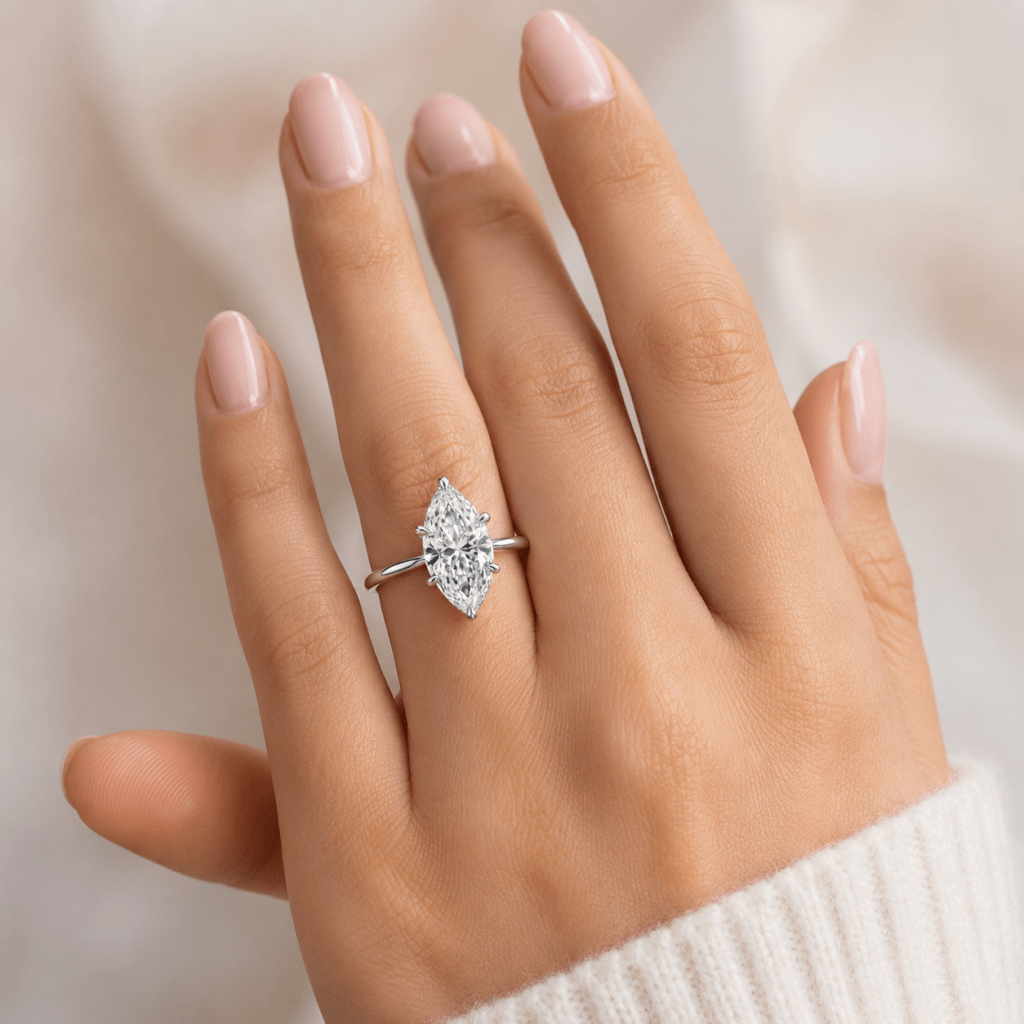
Photographs can help establish a direction. Trying rings on reveals much more. Furthermore, A design that looks delicate in a close-up image may feel substantial on the hand, while a seemingly modest ring can have remarkable presence when its proportions are well judged.

Choosing a Diamond Shape

The diamond’s outline establishes the ring’s visual character. Its faceting determines how light moves within it. Both deserve attention.

Round Brilliant: Balanced and Versatile

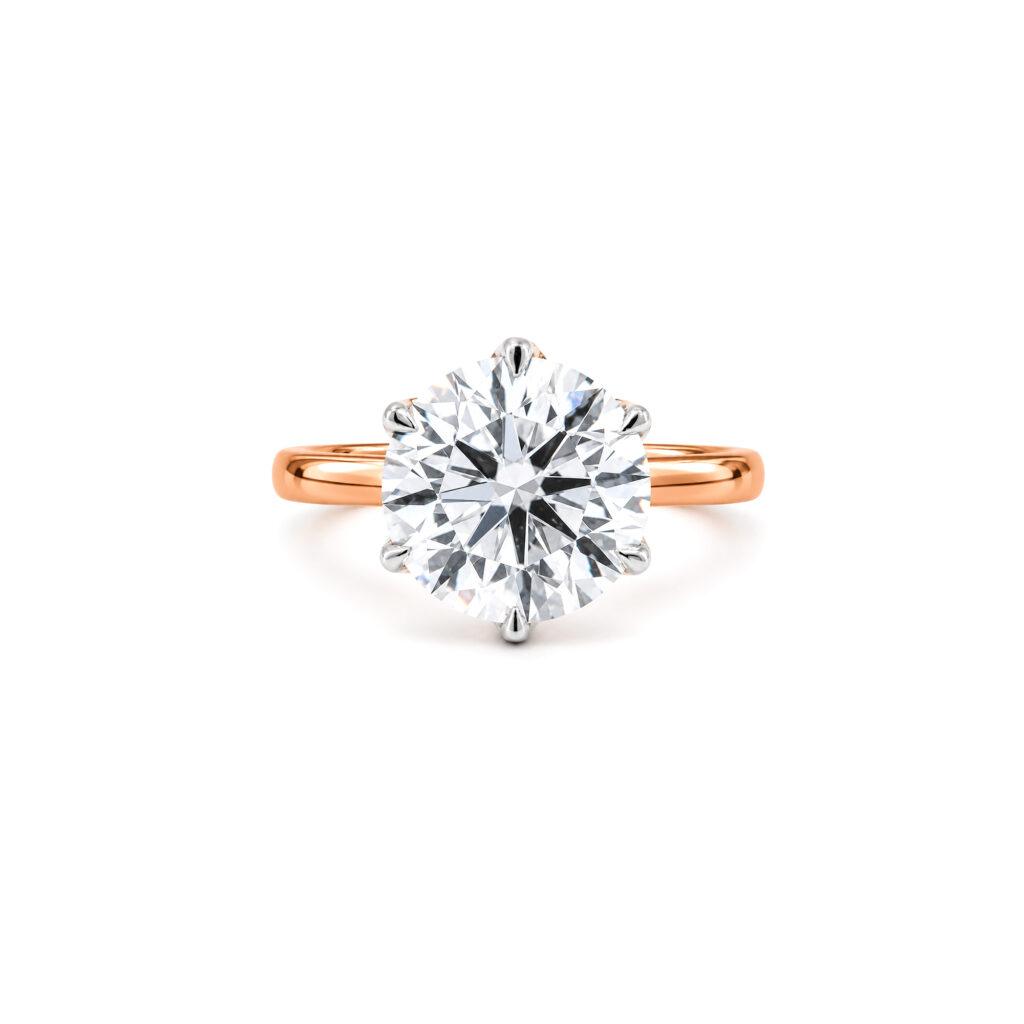
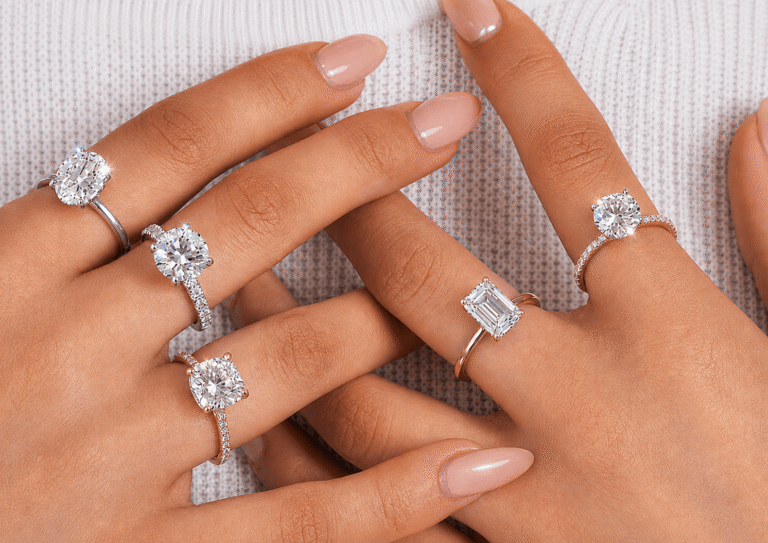
The round brilliant combines a symmetrical outline with a lively pattern of sparkle. It works comfortably within many settings, including classic solitaires, three-stone rings, and diamond-set bands. Its familiarity gives it versatility. Small changes in band width, prong style, and setting height can make the finished ring feel traditional or distinctly contemporary.

Oval: Soft Lines and Elongated Proportions

Oval diamonds introduce length without sharp corners. Their flowing silhouette can look graceful on the hand, particularly when the band and setting support rather than overwhelm the stone. Examine individual diamonds carefully. The distribution of brightness and shadow across an oval can vary, affecting its overall appearance.

Emerald Cut: Architectural Elegance

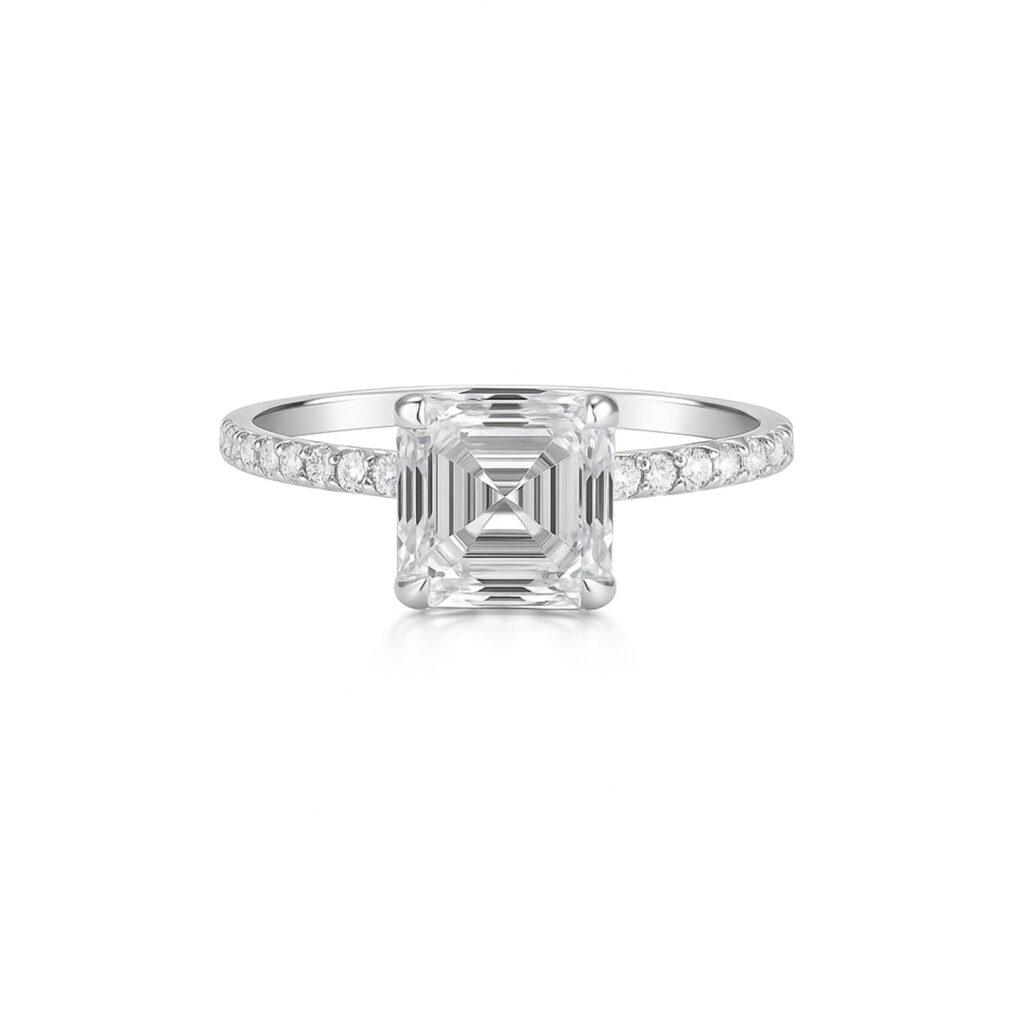
An emerald-cut diamond has stepped facets and clipped corners, producing broad flashes of light and a measured, geometric appearance. Its beauty is contemplative rather than effervescent. Because its facets are relatively open, inclusions and colour can be easier to notice than in some brilliant-cut diamonds. For an elongated emerald-cut engagement ring, compare the stone’s length-to-width proportions alongside its actual dimensions. A pleasing outline matters as much as carat weight.

Cushion, Pear, and Princess: Distinctive Alternatives

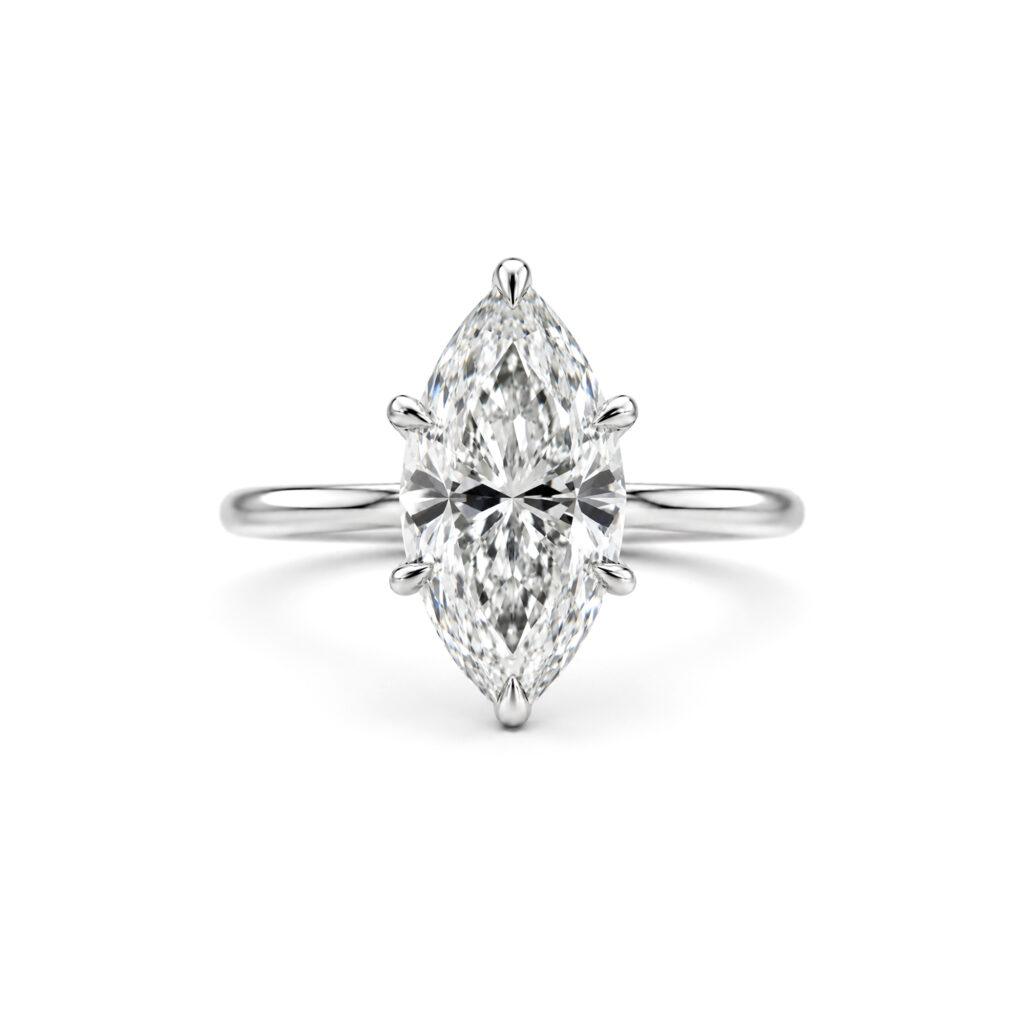
Cushion-cut diamonds combine softened corners with a gently pillowed outline. Pear shapes introduce asymmetry and a tapered point. Princess cuts offer crisp geometry with a square silhouette. Each brings a different personality to the ring. Settings for pointed shapes should give appropriate consideration to protecting vulnerable corners or tips.

Understanding Diamond Quality

The four Cs—cut, colour, clarity, and carat weight—provide a useful starting point. They are most valuable when considered together. Cut concerns proportions, facet arrangement, and finish. It strongly influences a diamond’s brightness and its interaction with light. Shape and cut are related concepts, but they are not interchangeable. Colour describes the presence of tint in diamonds assessed on the conventional D-to-Z scale. The visual impression depends partly on the diamond’s size, shape, and surroundings. Clarity assesses internal inclusions and external blemishes. Their position and nature can matter as much as their number. Some characteristics are difficult to see without magnification; others are more apparent. Carat weight measures weight, not face-up size. Two diamonds of equal weight can look noticeably different because of their dimensions and proportions. Allow the grading information to guide the comparison, then inspect the diamond itself. A compelling stone should remain attractive beyond a single angle or a dramatic spotlight.

Selecting an Engagement Ring Setting

A setting shapes the appearance of the diamond and influences how the ring feels during daily wear.

Solitaire Settings

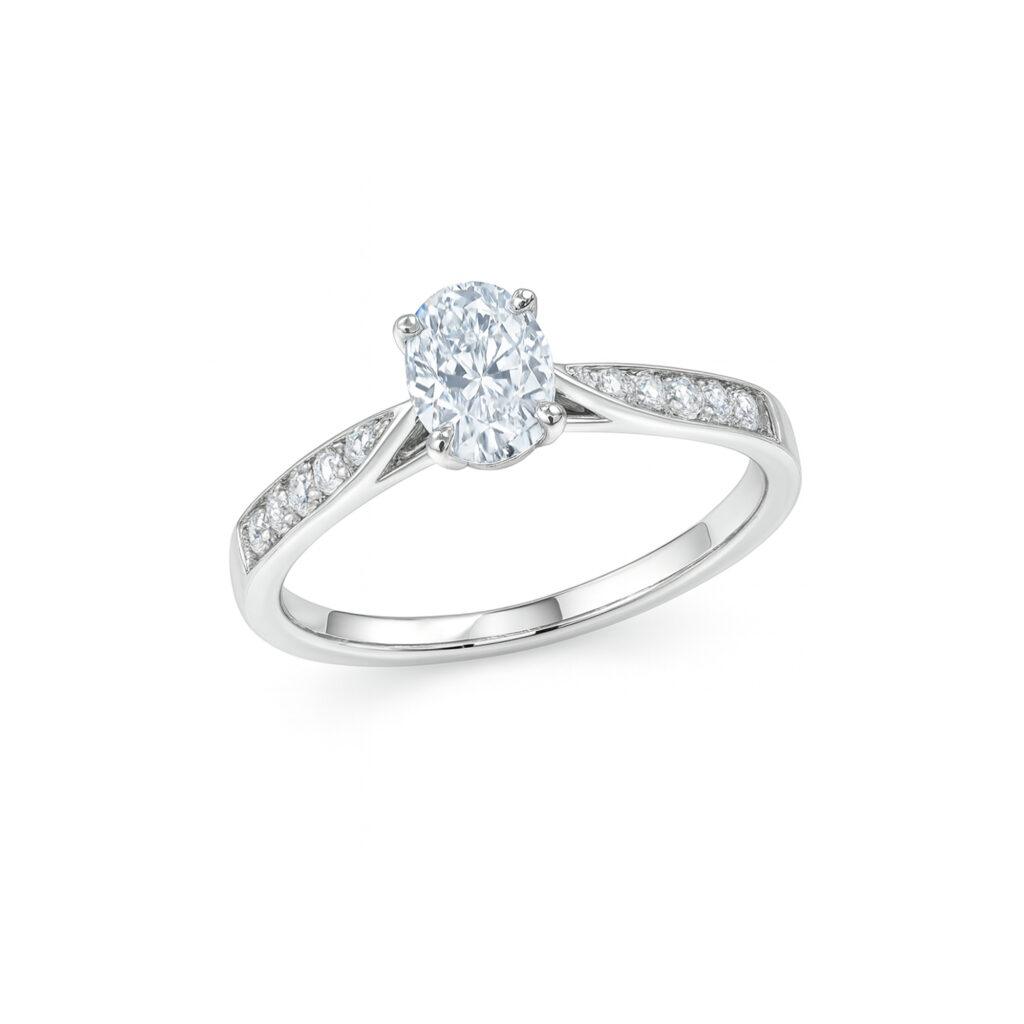
A solitaire places one centre stone at the heart of the design. With little ornamentation to distract the eye, details become especially important: the symmetry of the prongs, the contour of the band, and the transition between the setting and shank. Restraint makes craftsmanship visible.

Halo Settings

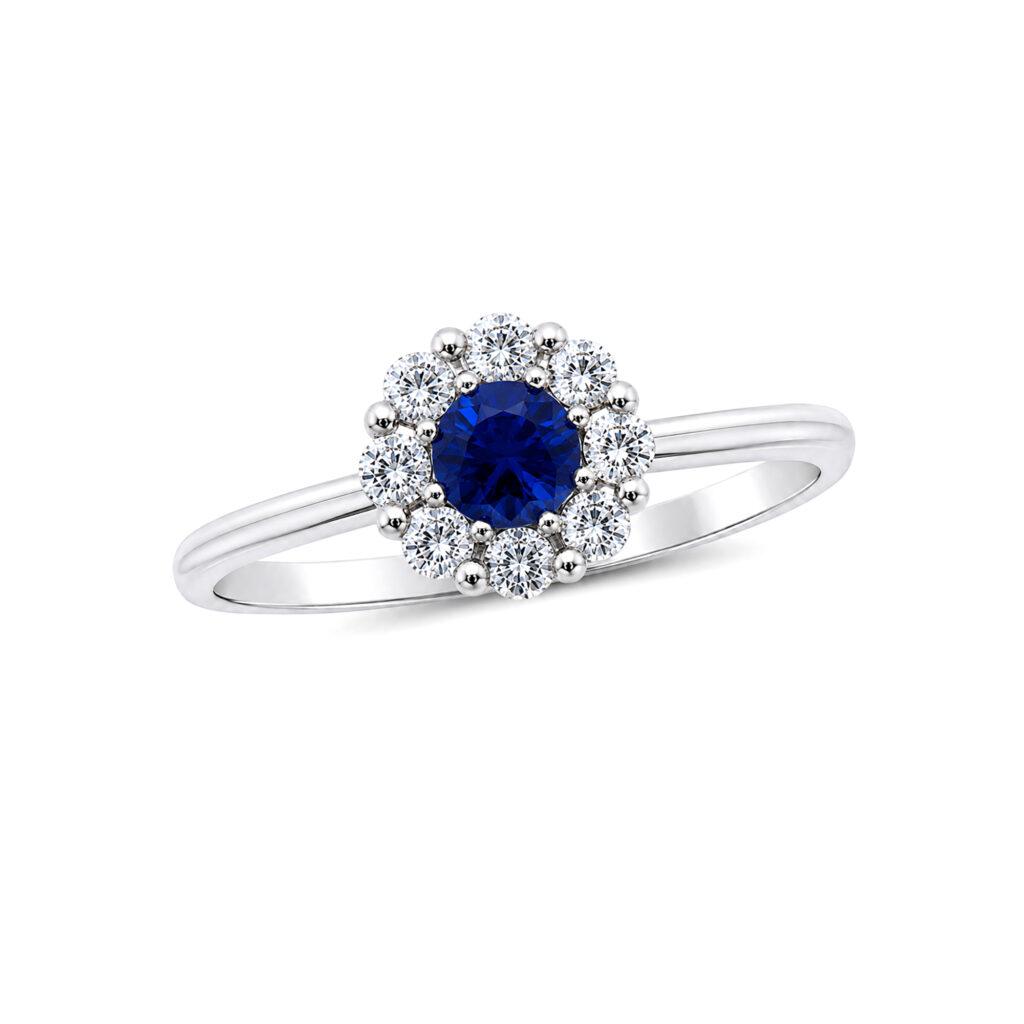
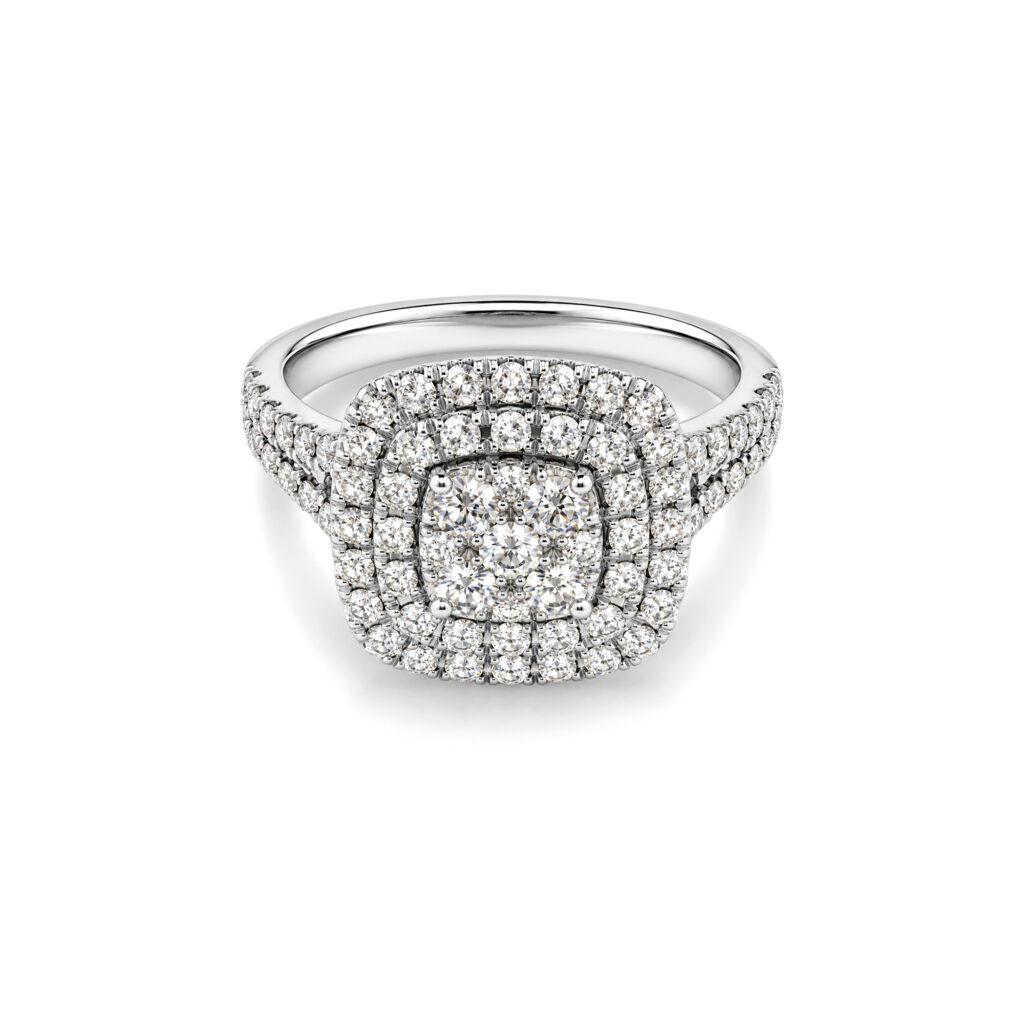
A halo surrounds the centre stone with smaller diamonds, creating a broader sparkling outline. The effect can be delicate or dramatic, depending on the dimensions and arrangement. Look for consistent spacing and a harmonious relationship between the centre diamond and its surrounding stones.

Three-Stone Settings

Three-stone engagement rings create a balanced composition around the centre diamond. Side stones may repeat its shape or introduce contrast through tapered baguettes, half-moons, or other complementary forms. The result depends on proportion. Side stones should contribute to a coherent design.

Pavé and Diamond-Set Bands

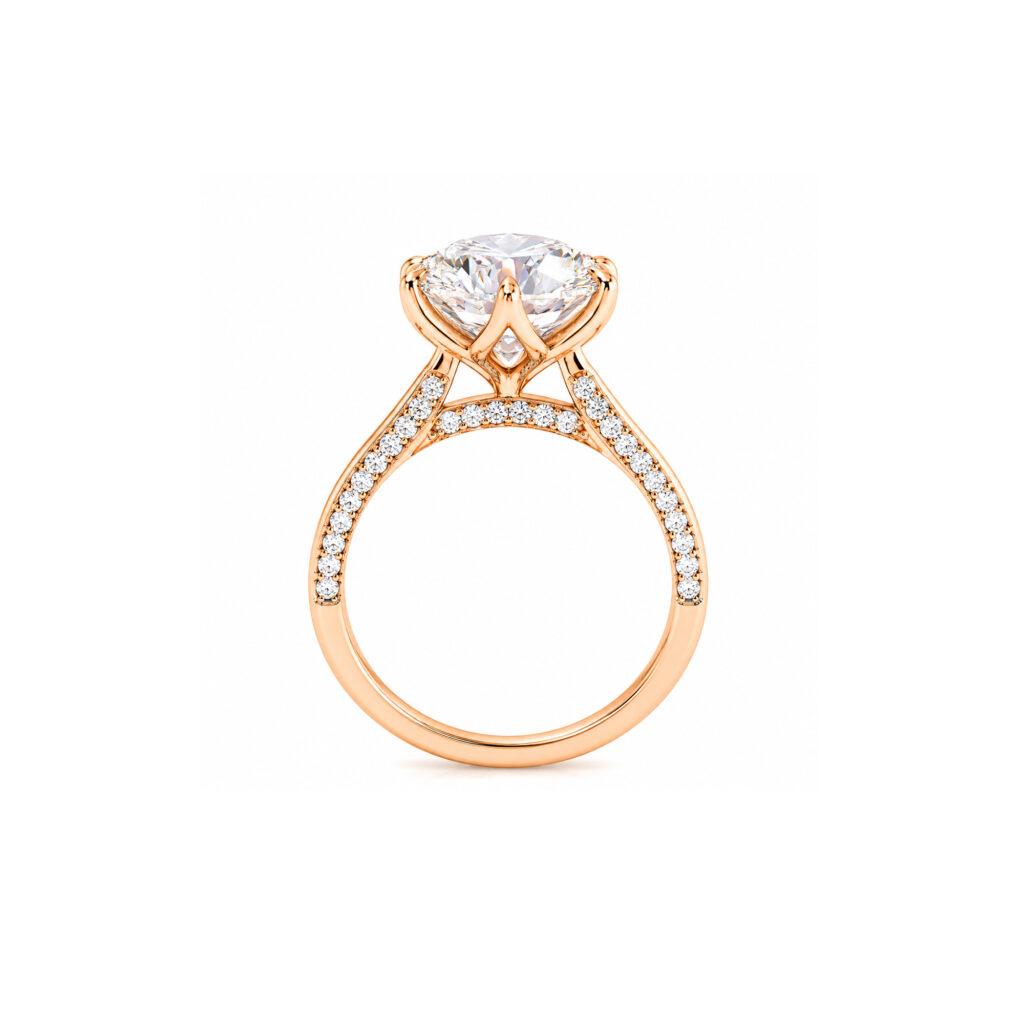
Small diamonds along the band add texture and scintillation—the changing sparkle visible as the ring moves. Inspect the setting work closely. Even alignment, smooth edges, and comfortable contact with adjacent fingers all contribute to the quality of the finished piece.

Bezel Settings

A bezel frames the diamond with a metal rim. Its continuous outline creates a clean, sculptural appearance and can help protect the stone’s edges. For someone who prefers a less exposed setting, it is a style worth trying on.

Yellow Gold, White Gold, Rose Gold, or Platinum?

Metal colour changes the mood of an engagement ring. Yellow gold introduces warmth and a clear contrast against a white diamond. White gold creates a cooler, more tonal presentation. Rose gold adds a pink hue that can soften geometric designs or complement decorative details. Platinum offers a naturally white appearance and a substantial feel. Its surface develops marks and patina with wear, just as gold alloys also show evidence of use over time. Ask about the specific metal composition and maintenance requirements. Many white gold rings have a rhodium finish that may need renewal, while alloy composition can influence colour and suitability for someone with metal sensitivities. Choose with the hand in view. The right metal should complement the wearer’s preferences and feel comfortable as part of their everyday jewellery.

Natural or Laboratory-Grown Diamonds?

Natural and laboratory-grown diamonds have essentially the same chemical composition and crystal structure. Their origins differ. Natural diamonds form through geological processes. Laboratory-grown diamonds are produced using technological methods. Both are distinct from diamond simulants such as cubic zirconia and moissanite. For an engagement ring, the choice may reflect the wearer’s feelings about origin, rarity, and the meaning attached to the stone. Clear disclosure is essential. Confirm whether the diamond is natural or laboratory-grown, ask about relevant treatments, and ensure that the written description corresponds to the stone being purchased. The preference should belong to the person whose ring it will become.

Planning a Budget with Purpose

A useful engagement ring budget begins with a comfortable spending limit and a clear understanding of priorities. Decide what matters most. It may be an elongated shape, a particular metal colour, an understated setting, or a diamond with strong visual presence. These preferences help narrow the search without relying on an arbitrary spending formula. Request an itemised quotation where possible. Confirm what is included, particularly sizing, engraving, documentation, and any applicable aftercare. Compare complete rings carefully. Differences in diamond characteristics, metal specifications, and construction can make superficially similar designs difficult to assess on appearance alone.

Commissioning a Bespoke Engagement Ring in Dubai

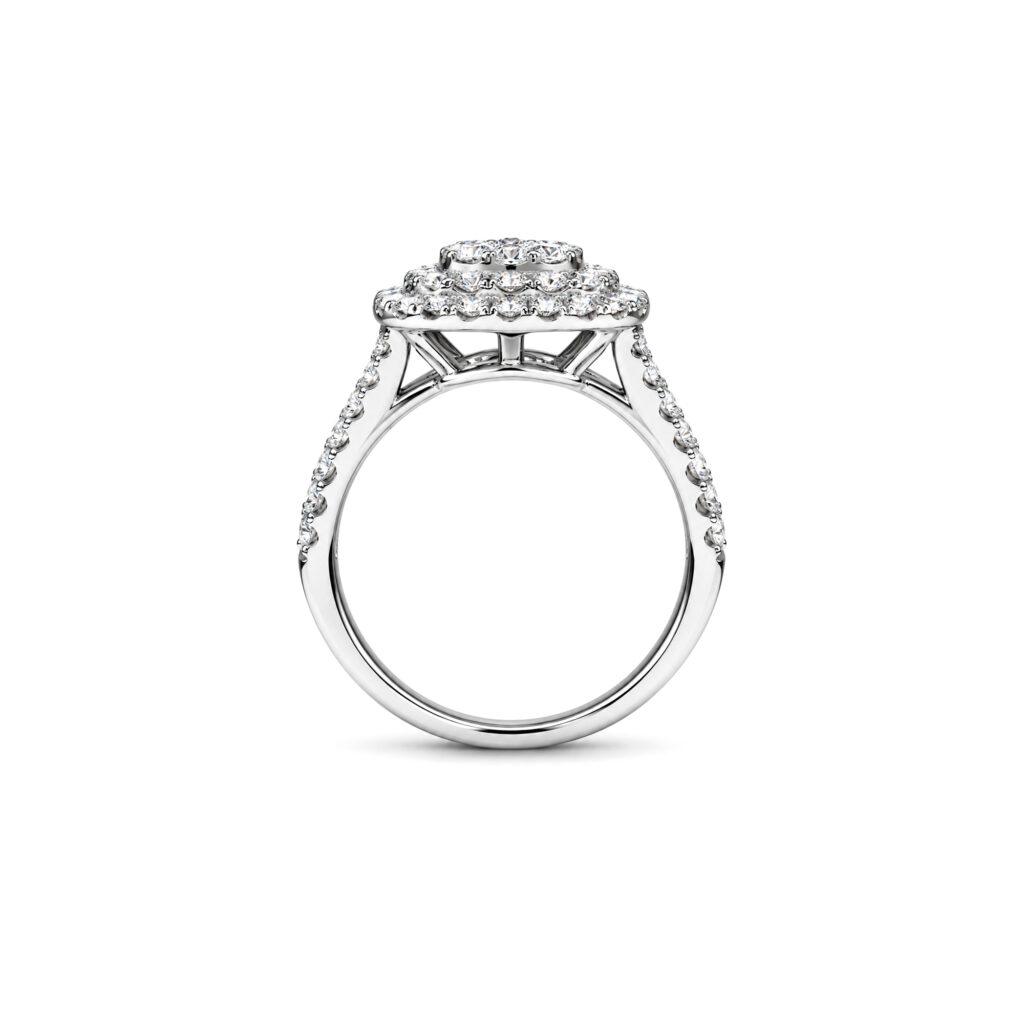
A bespoke ring allows individual preferences to guide the design from the beginning. It may involve a distinctive centre stone, a particular band profile, or a discreet personal detail beneath the setting. Start with dimensions and wearability. Discuss the centre stone’s measurements, the band’s width and thickness, and the height of the setting. Consider how the engagement ring will sit beside a wedding band and whether the intended pairing requires a gap, a contoured band, or a different setting profile. Review drawings and models carefully. Enlarged renderings can make delicate features appear more substantial than they will be in the finished ring. A successful bespoke design translates an idea into an object that feels as convincing on the hand as it does on the page.

What to Check Before Purchasing

Before making the final decision, examine both the ring and the terms of purchase.
  • Confirm the diamond’s origin and any disclosed treatments.
  • Review available independent gemmological documentation.
  • Check that the stone’s details correspond to its documentation.
  • Inspect prongs, small-stone alignment, and the finish of the band.
  • Confirm the metal specification and ring size.
  • Ask about resizing limitations, returns, warranties, and repair arrangements.
  • Obtain the agreed specifications and terms in writing.
A grading report describes assessed characteristics. It does not replace a workmanship inspection or guarantee a particular market value.

Caring for an Engagement Ring

An engagement ring is made to be worn, but thoughtful habits help preserve its condition. Remove it before heavy lifting or activities that could expose it to sharp impacts. Store it separately from other jewellery to reduce scratching, and follow the jeweller’s cleaning guidance, particularly if the ring contains treated stones or different gemstones. For many uncomplicated diamond rings, mild soap, warm water, and a soft brush can remove everyday residue. Professional inspections can identify worn prongs or loose stones before they lead to a loss. Small acts of care protect an object with considerable emotional significance.

Choosing a Ring That Feels Right

The most satisfying engagement rings in Dubai bring beauty and practicality into balance. Their diamonds attract attention, their settings feel comfortable, and their designs reflect the people who wear them. Take time to compare shapes. Look closely at the workmanship. Consider how the ring feels during an ordinary movement of the hand. Whether the choice is a luminous round solitaire, an elongated emerald-cut diamond, or a richly detailed gold setting, its lasting distinction comes from being chosen with understanding—and given with meaning.
Diamond Engagement rings in Dubai
Original price was: د.إ8,300.00.Current price is: د.إ7,800.00.
Original price was: د.إ155,398.00.Current price is: د.إ146,732.00.
Original price was: د.إ556,750.00.Current price is: د.إ533,750.00.
Original price was: د.إ16,670.00.Current price is: د.إ14,650.00.
Original price was: د.إ5,944.00.Current price is: د.إ3,851.00.
Original price was: د.إ12,356.00.Current price is: د.إ10,234.00.
Original price was: د.إ27,890.00.Current price is: د.إ26,450.00.
Original price was: د.إ15,670.00.Current price is: د.إ14,766.00.
Original price was: د.إ13,471.00.Current price is: د.إ8,900.00.
Original price was: د.إ6,345.00.Current price is: د.إ5,770.00.
Original price was: د.إ23,200.00.Current price is: د.إ15,900.00.
Original price was: د.إ22,900.00.Current price is: د.إ14,890.00.

Leave a Reply

Your email address will not be published. Required fields are marked *

19 − 14 =